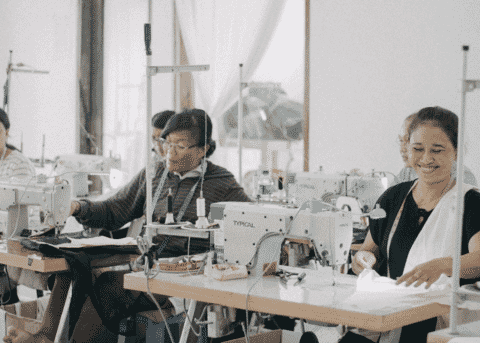
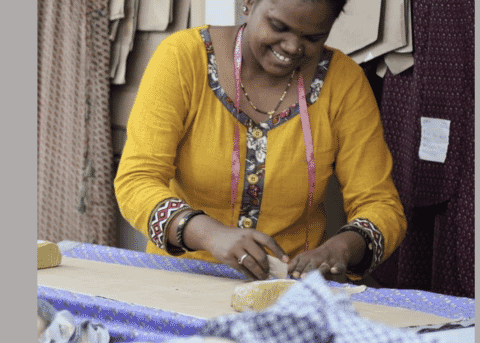
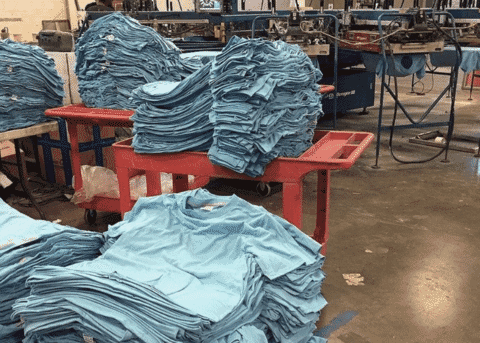
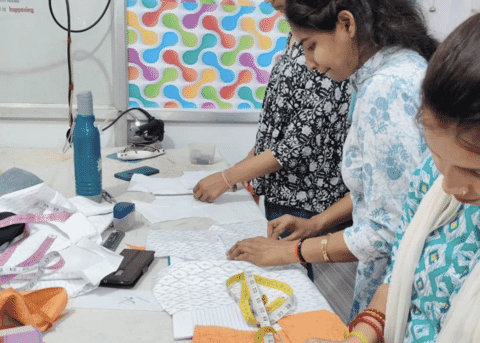
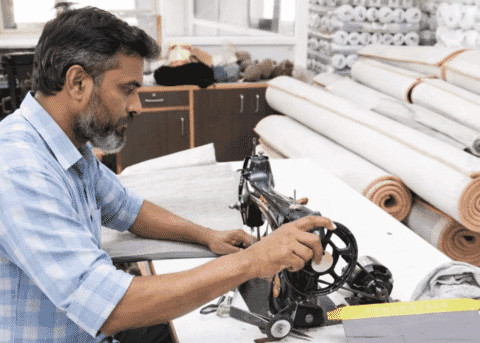
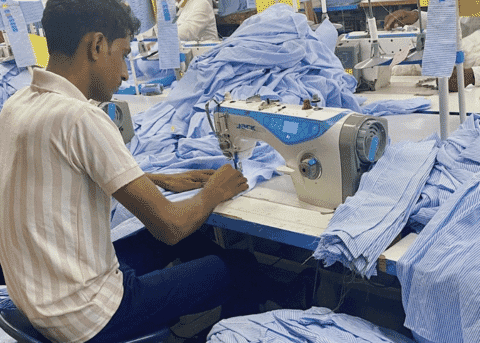
A group of documented factories in India
We are a group of documented clothing factories in India: cotton jersey, knitwear, wovens and hand work, producing for brands from 100 pieces per style. Tell us what you’re making. If it fits a factory in our group, we place your brief there and stay involved from sample to delivery.
No commissions · No markups · The factory bills you directly
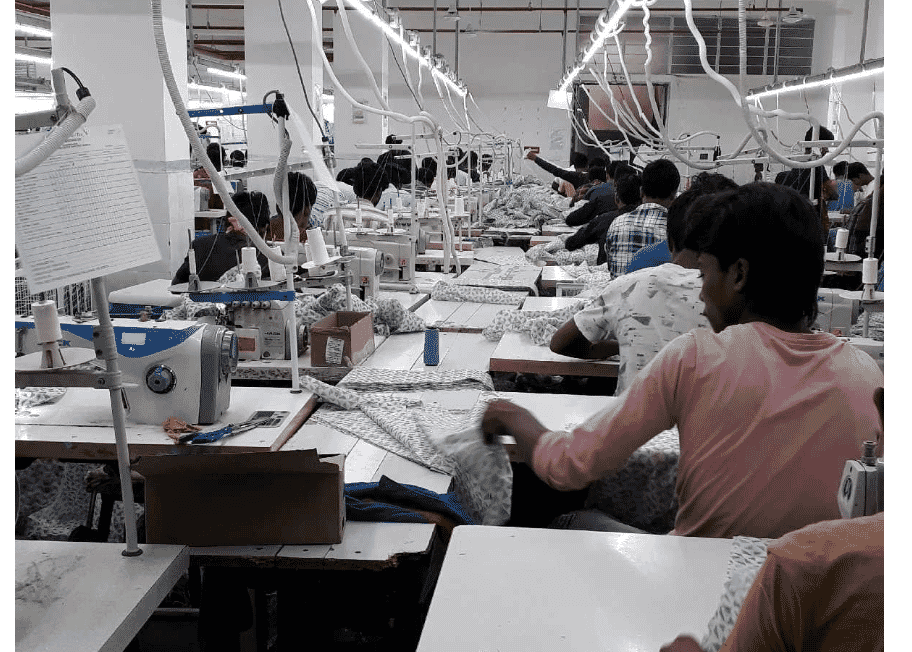
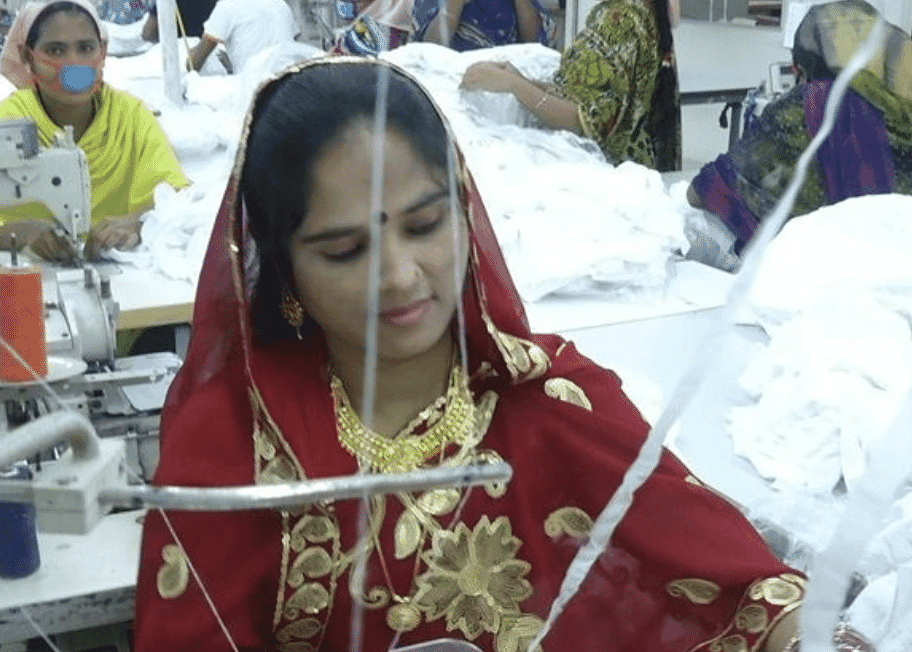
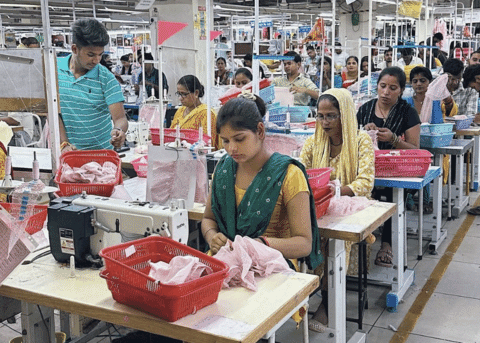
Sewing lines, knit to woven
Every brief
Six clusters, six specialties
India’s garment clusters rarely overlap. Knit a tee where the knitting, dyeing and sewing sit side by side; send a sweater north and a block print west. Here is what each one does best, and where it struggles.
Schematic, not to scale.
What our factories make
The group floor is 100 pieces per style. What moves it up is the fabric, not the sewing line: stock yarn keeps a jersey tee at 100, a mill-commissioned woven starts near 1,000. Pick your family and see who makes it.
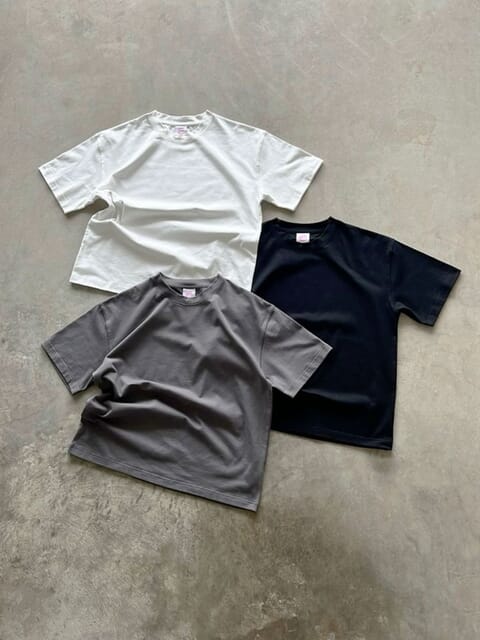
from 100Tees, polos, long sleeves and babywear in cotton and organic cotton jersey.
From 100 on stock yarn. Custom-dyed yarn pushes it up.
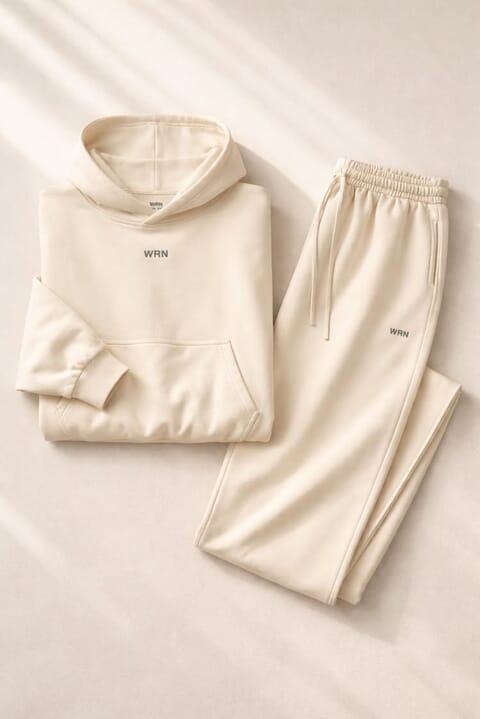
150–250Fleece hoodies, crewnecks and joggers, brushed or loopback.
Usually 150–250, set by the fleece fabric.
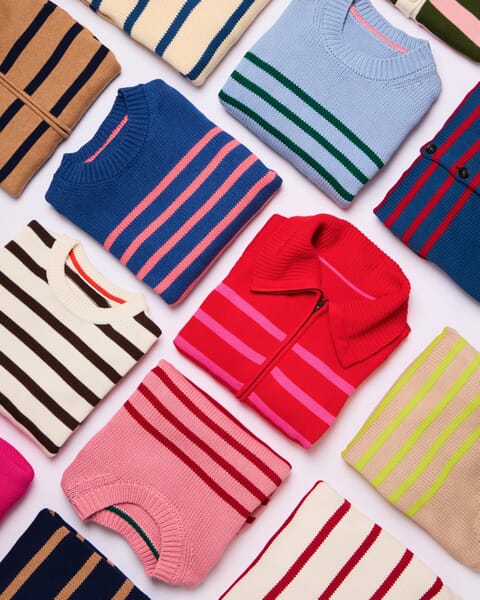
250–400Wool, acrylic and cotton sweaters, cardigans and winter knits.
Wool sweaters usually 250–400, set by the yarn.
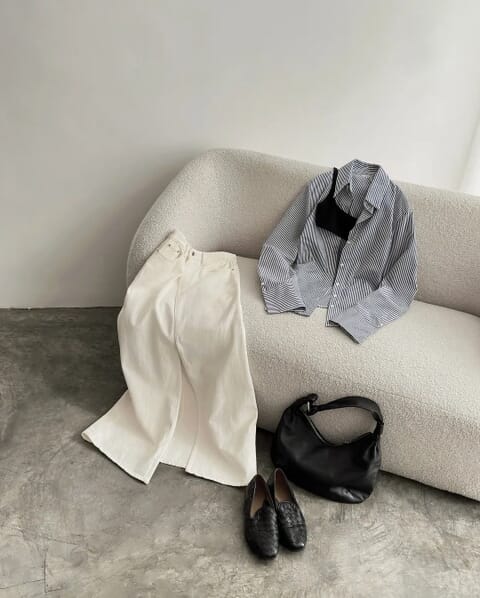
from 100Poplin shirts, linen and cotton dresses, blouses and woven separates.
From 100 on stock fabric where the factory allows; commissioned fabric pushes it to about 1,000.
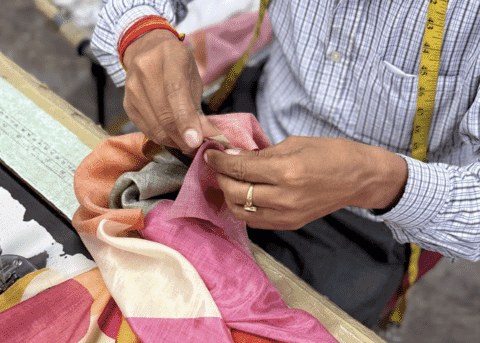
150–300Hand embroidery, hand block print and natural dye on cotton and linen.
Usually 150–300. Hand work varies a little piece to piece.
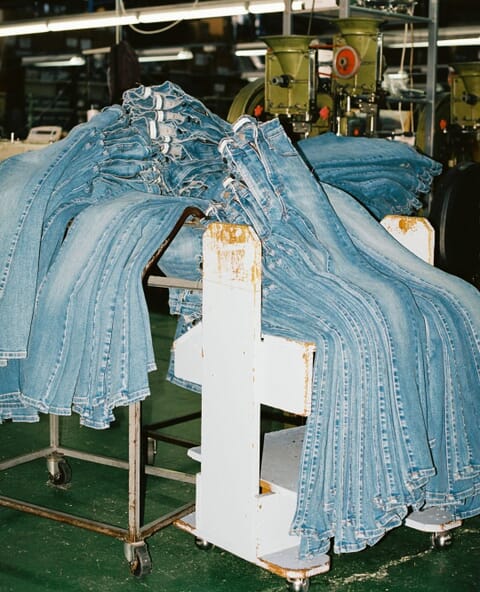
from 200Jeans, denim jackets and skirts, with washes quoted per style.
From 200, set by the denim fabric and the wash.
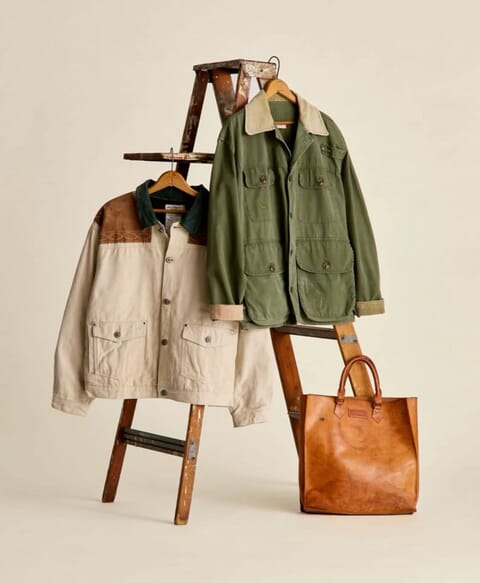
from 150Jackets, coats and structured pieces with linings and interlinings.
From 150. Complex hardware is often imported, so plan for it.
Samples only, a capsule across families, or a product that isn’t listed. Tell us what it is and we’ll say plainly whether India is the right place for it.
Send a free briefMinimums are the usual floor in the market for each family, not a quote. We confirm the exact number with the factory before you commit.
Garment photos on these cards are style references from other brands, not runs from our factories. Photos: cotton tees in a flat lay: Pinterest user malak waleed; a fleece hoodie and joggers set: etsy.com; striped knit sweaters: Pinterest user Audra Stam; a summer shirt and trousers: Instagram; washed jeans on a rack: en-route.com.au; utility and work jackets: Pinterest user Fernanda F Styling.
How it works
No cold emails, no four-week silence. You tell us the product; we place it with the factory in our group built for that product, fabric and quantity.

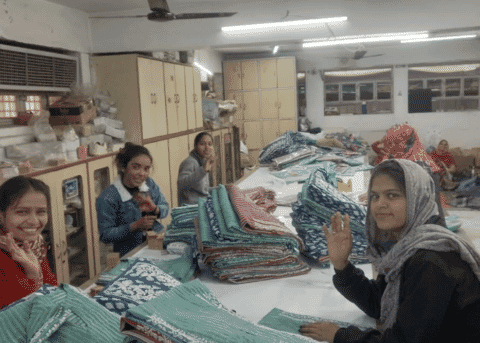
Sewing line with bundles in red crates
Product, pieces per style, fabric, target price and ship date. Sketches or a reference garment are enough to start.
FreeOur team reads it. If no factory in our group is built for your product, we tell you by email before any fee is discussed.
We quote our fee in writing after we read the brief and before any work starts. It is never tied to your order size.
We stay involved through samples and bulk, and you pay the factory for the run. No commissions, no markups.
Then, on a first order
Diwali (October or November, a different date each year) and the June to September monsoon move the calendar. We plan around both.
Three ways to start
Send the product and the quantity and we place it with the factory in our group built for it. Prefer to do the outreach yourself? Buy the Directory. No tech pack yet? We draw one.
We read your brief and place it with the right factory.
Free to send · No commission from factories.
Do the outreach yourself, with the contacts in hand.
One-time payment · Instant access.
A factory-ready spec an Indian factory can cost from.
One price per style · Secure checkout by Stripe.
Three or more tech packs at once? Tell us in your brief before you pay.
Honest India
India is very good at a few things and the wrong answer for others. We would rather tell you now than after your sample.

The fabric sets the minimum
Not the sewing line. Stock yarn keeps a tee at 100; fabric commissioned at a mill starts near 1,000.
Hand work varies
Embroidery and block print differ a little piece to piece. You approve the sample and the acceptable variation before bulk.
The calendar moves
Diwali closes most factories for 1–2 weeks in October or November, on a different date each year. The monsoon slows dyeing and washing.
GOTS share: GOTS, 2025.
What we put in writing
No brand counts, no invented audits. Just the terms every brief gets.
Questions brands ask
Minimums, lead times, duty and what we charge. If yours isn’t here, put it in your brief.
Minimums, timing, cost and fees
The ten questions we answer most, in the order brands ask them.
100 pieces per style across our group. What really sets the floor is the fabric, not the sewing line: cotton jersey on stock yarn runs from 100, hoodies and polos usually need 150–250, wool sweaters 250–400, and a woven made from fabric commissioned at a mill starts around 1,000. We confirm the exact minimum with the factory before you commit.
Plan 3–5 weeks for sampling, then 12–16 weeks from approved sample to goods shipped on a first order, and 8–10 weeks on a repeat. Fabric (3–6 weeks) is usually the critical path.
Diwali falls in October or November, moves every year and closes most factories for 1–2 weeks. The monsoon (June to September) slows dyeing and washing. We build both into your timeline.
Cut, make and trim is usually 20–30% of the factory price. At 300–500 pieces, before fabric, that is roughly $1–3 for a t-shirt, $3–7 for a hoodie, $4–11 for a dress and $7–23 for a jacket. Fabric is roughly half, so the fabric you pick moves the number more than any negotiation. These are indicative, not quotes. The cost calculator gives you a full ex-factory range in a minute.
The ordinary duty for your product’s classification plus, since 24 July 2026, a 10% Section 301 tariff on Indian goods (USTR, July 2026). On a cotton knit t-shirt the ordinary rate is 16.5%, so duty comes to about 26.5% of the customs value. The 18% reciprocal tariff announced in February 2026 no longer applies. The 2026 position is still moving: check your classification with your customs broker. For the UK and EU, ask your broker for the current rate.
Sending a brief is free. If your project fits a factory in our group, we quote our fee in writing after we read the brief and before any work starts. It is never tied to your order size, we take no commission from factories, and the factory bills you directly for the run.
Send a free briefTiruppur for cotton knitwear, Ludhiana for wool and winterwear, Delhi NCR for wovens and hand embroidery, Jaipur for block print and craft, Bangalore for structured garments, and Surat for fabric and print. The clusters rarely overlap, so choosing the city is most of choosing the factory. Your brief tells us which one.
Many hold GOTS, OEKO-TEX Standard 100 or GRS, and some ISO 9001 or BSCI. Not every factory holds everything. If a certification is a hard requirement for your market or your retail buyers, put it in your brief and we place it only with factories that hold it. We don’t list certifications we haven’t checked.
Not to send a brief: sketches, photos or a reference garment are enough for a first answer. A factory quotes from a spec, though. Our tech pack is $79 per style, delivered in 3–5 working days with 2–3 revision rounds.
No, and that is the point of it. Hand work varies a little from piece to piece and between printing batches. You approve a sample and agree what counts as acceptable variation before bulk starts. If you need thousands of identical pieces, machine embroidery or digital print is the better choice, and we will say so.
Yes. Export factories have at least one English-speaking contact, usually in merchandising or sales. On the floor people speak Hindi, Tamil or Punjabi depending on the cluster, which is why a clear written spec matters more than a long call.
Send a brief
One short form, read by our team. If a factory in our group is built for it, we place it. If not, we say so, free.
What to put in your brief
Free brief · Reply within 24 hours · No commissions


The form has been successfully submitted.